

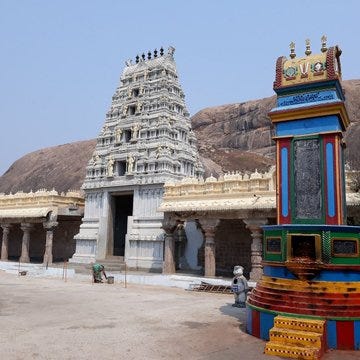
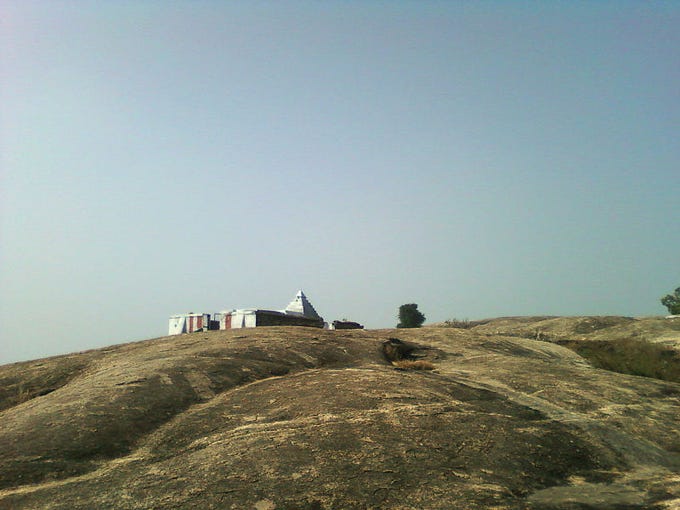
Located in Nellimarla Mandal of Vizianagaram district, Ramatheertham is set against the Bavikonda hills, with the serene Champa River flowing below. The main Sri Rama temple, believed to be over a thousand years old, sits atop this rocky hillock. Legend holds that the deities of Rama, Sita, and Lakshmana were installed by the Pandavas during their exile. The silver kavacham-clad deities and the Rama Sthambham installed by Pedda Jeeyar Swamy add to the sanctity.
What makes Ramatheertham truly remarkable is its multi-religious legacy.
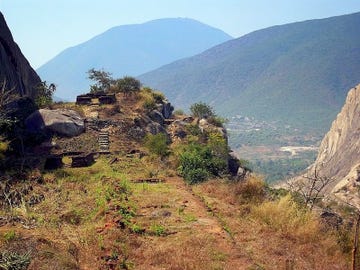
On Gurubhakta Konda, archaeologists unearthed a vast Buddhist monastery with a Mahastupa, Chaitya, votive stupas, and monastic cells. Bodhi Konda and Durgakonda hills preserve Jain relics, natural caves, slab sculptures of Tirthankaras, and ruined brick shrines. These hills form a sacred triad, each echoing centuries of spiritual pursuit.
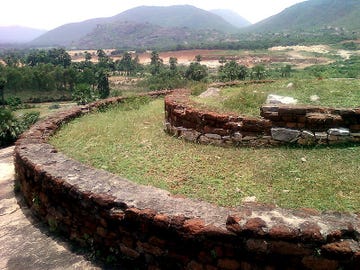
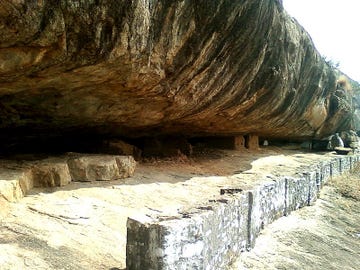
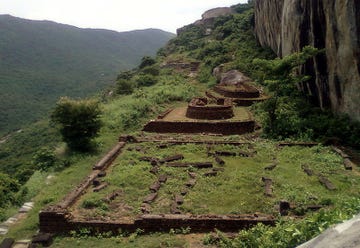
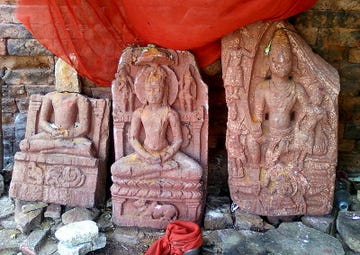
Ramatheertham is the oldest Rama Temple in Andhra Pradesh, as per the inscriptions here of Indra Bhattaraka Varma, who ruled between 469–496 CE, is supported by inscriptions found at the site, marking it as one of the earliest known Rama temples in Andhra Pradesh. That makes it not just a devotional center, but a living chronicle of early Vaishnavite worship in the region.
According to local lore, the murthi of Shree Rama was discovered in a sacred pond, which led to the naming of the site as “Ramatheertham”. This rediscovery, believed to have occurred in the 16th century, inspired the Pusapati rulers to construct the present temple and enshrine the deity with due reverence.
According to the Sthala Puranam, the Pandavas are believed to have spent part of their exile here. A cave on the hill is traditionally associated with Bhima, where he is said to have meditated and stayed.
In the Dwapara Yuga, Lord Krishna is said to have entrusted the deities of Rama, Sita, and Lakshmana to a devout Vaikhanasa priest named Vedagarbha, instructing him to worship them during the Pandavas’ exile.
When threats from iconoclasts loomed during the Buddhist period, Vedagarbha’s descendants buried the deities in a theertham to protect them.
Centuries later, in the 16th century, a mute devotee reportedly received a divine vision under a banyan tree. Shree Rama appeared to her, blessed her with speech, and instructed her to reveal the location of the buried deities. The local king, Pusapati Sitaramachandra Raju, recovered the deities and enshrined them on Bhishma Ekadasi, giving rise to the present temple.
The larger temple at the foothills, distinct from the ancient hilltop shrine, was indeed constructed under the patronage of the Pusapati rulers of Vizianagaram. Positioned gracefully along the banks of the Champavati River, this temple reflects the dynasty’s commitment to reviving and preserving sacred heritage.
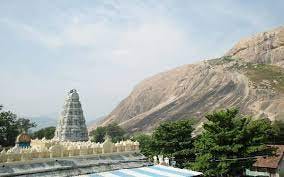
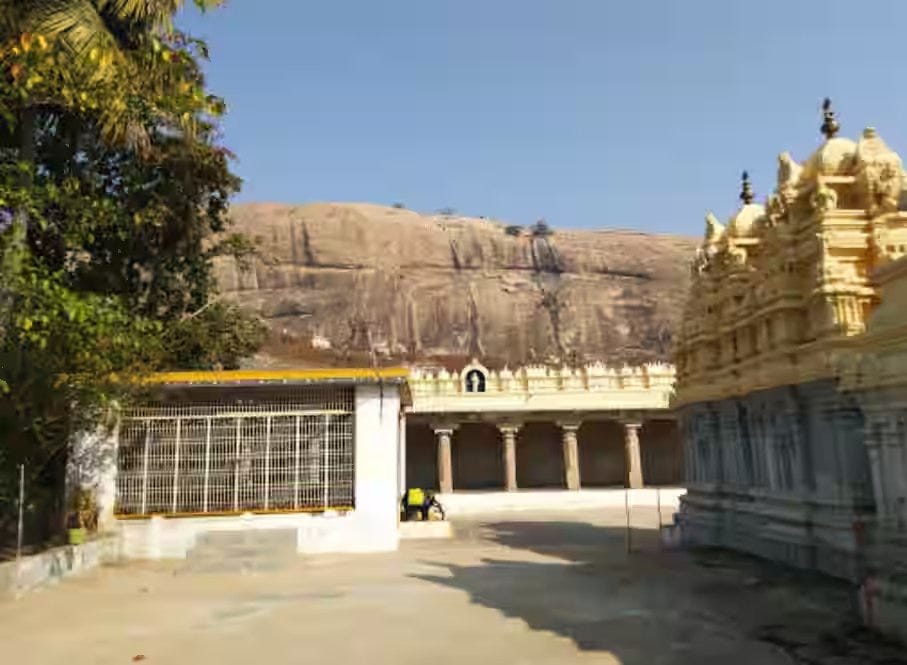
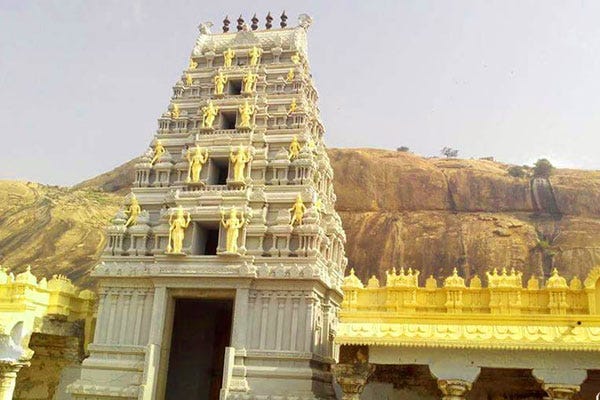
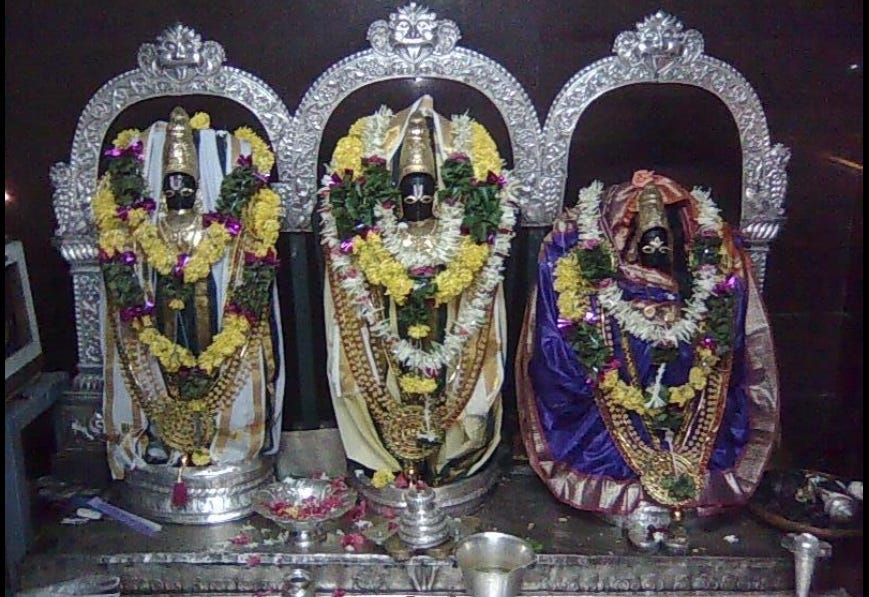
The temple at the base complements the hilltop sanctum, offering easier access for pilgrims while maintaining ritual continuity. Its construction likely dates to the 16th–18th centuries, aligning with the zenith of the Vizianagaram Samsthanam’s cultural patronage.The temple complex includes mandapas, a prakaram, and a dhwaja sthambham, blending traditional Dravidian elements with regional flourishes.
The Champavati River, flowing gently past the temple, adds a layer of sanctity much like the Sarayu in Ayodhya. Its presence reinforces the site’s identity as “Uttarandhra Ayodhya,” where water, stone, and memory converge in sacred harmony.
The original Rama temple, perched atop the Bodhikonda hill, is indeed more modest in scale but immense in spiritual weight. It’s here that the ancient sanctum , believed to have been sanctified by the Pandavas quietly watches over centuries of devotion.
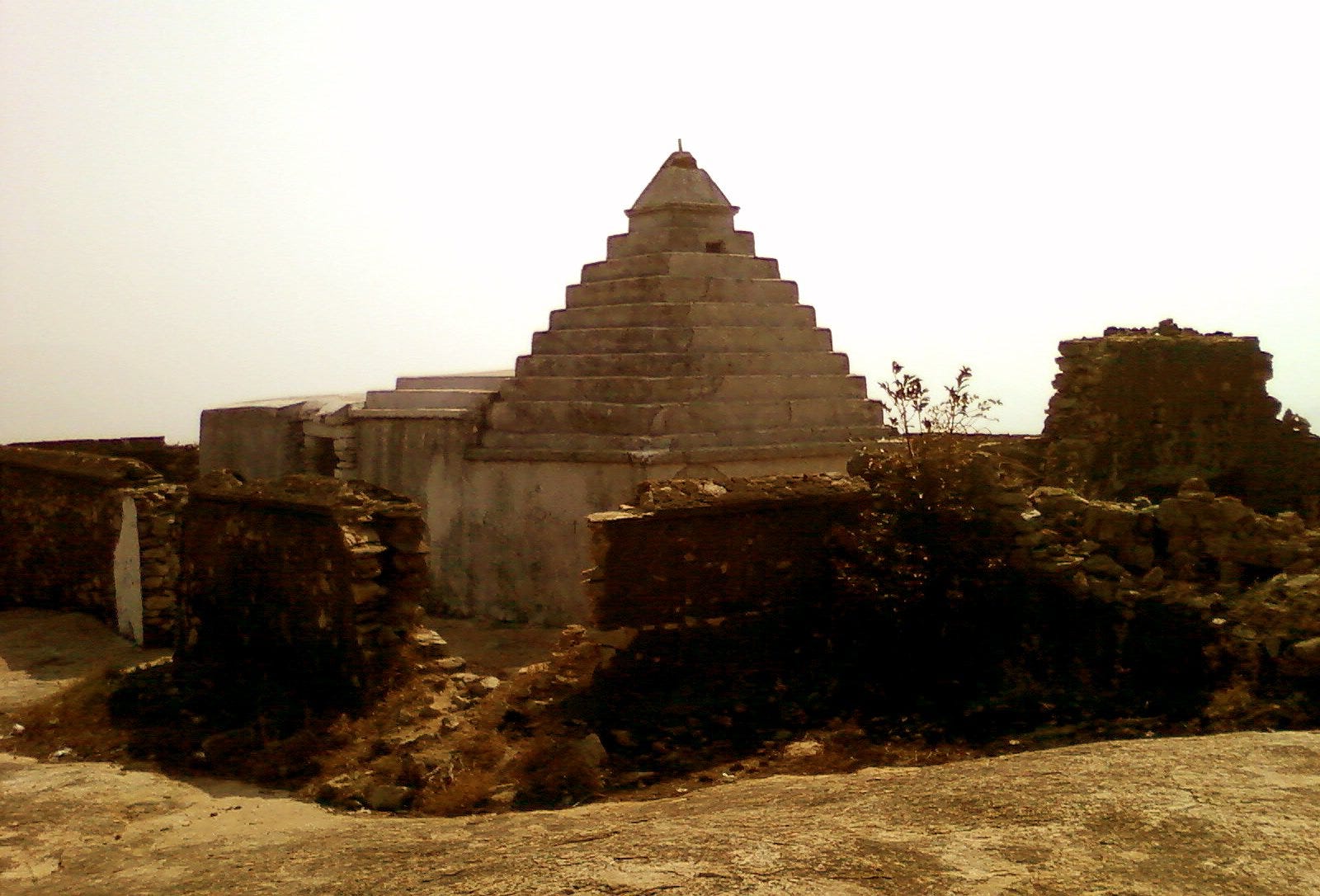
Here, Rama is venerated not as the triumphant king of Ayodhya, but as Vanavasa Rama — the ascetic wanderer, the dharma-bearer in exile. This epithet evokes a deeply human, contemplative aspect of Rama, resonating with the site’s quietude and its forested, rocky terrain. It’s a rare devotional lens, and one that aligns beautifully with your narrative sensibilities.
The tradition that Shree Krishna himself installed the deities of Rama, Sita, and Lakshmana adds a profound Vaishnavite layer — a divine handoff across yugas. Krishna, the avatar of compassion and cosmic strategy, entrusting the sacred icons to Vedagarbha, becomes a symbol of continuity between avatars, a motif ripe for poetic exploration.
Atop Bodhikonda, the presence of Rama’s footprints carved into the rock is a powerful symbol — not just of physical passage, but of divine imprint. It’s as if the hill itself remembers. These footprints, like those at Chitrakoot or Rameswaram, become anchors of memory, where myth meets stone.
The cistern that holds water year-round atop the hill is no ordinary spring — it’s a theertham in the truest sense: a womb of sacred memory. In a landscape where water is seasonal, its constancy is seen as a divine blessing, perhaps even a metaphor for Rama’s unwavering dharma during exile.
Shree Rama Navami and Vaikuntha Ekadasi are grandly celebrated in this temple. During Rama Navami, Abhishekam and Alankaram of the silver-clad deities is done, along with Ramayana Parayanam and bhajans echoing through the hills.
Giri Pradakshina involves circumambulating the triad of hills — Bodhikonda, Gurubhakta Konda, and Durgakonda — a symbolic journey through dharma, renunciation, and shakti.
The Metla Puja at the stairway leading to the hilltop shrine is especially poignant — each step is worshipped, symbolizing the ascent of the soul toward divine consciousness.
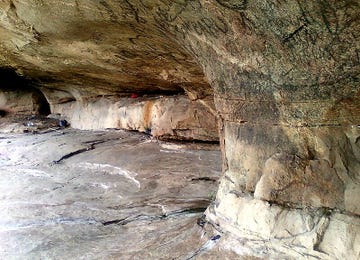
If you can take the walk up the hill, you get to see the ancient Jaina, Buddhist ruins too.
Bodhikonda, the southernmost hill, is home to natural caves with slab sculptures of Jain Tirthankaras, a ruined Jain brick temple on its southwestern slope.
Durgakonda (also called Ghani Konda), the northern hill, features a natural cave shrine with an image of Durga, giving the hill its name. Mounds and rock-cut relics containing both Jaina and Buddhist remains.
Gurubhakthulakonda has ruins of an ancient Buddhist monastery, the hill is around 500 feet high, the north face has a long platform around 903 ft by 100 ft in area. It has a brick Mahastupa at the western end, 65 feet in diameter, likely used for relic enshrinement and circumambulation. A chaitya hall, about 55 feet long, perched atop a detached rock mass. Its apse still holds a stone dagoba, with the lid of a relic casket preserved — a rare survival.
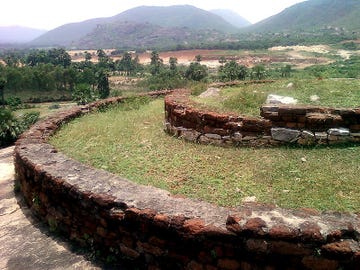
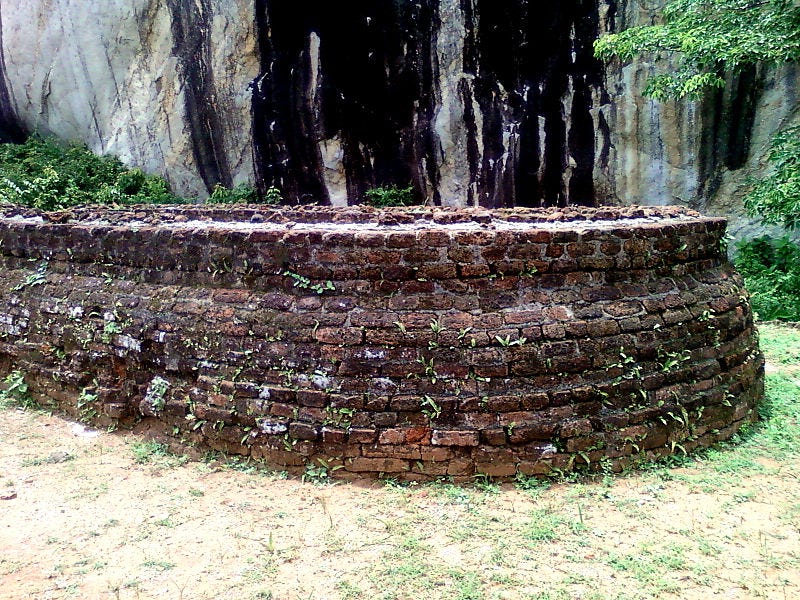
Rows of brick monastic cells, each ending in a small stupa, suggesting a disciplined sangha life.A pillared hall, 77 feet square, with fallen stone piers — possibly a congregation or teaching space.A perennial spring near the summit, feeding a tank beside the stupa — a sacred water source for ritual and daily use.
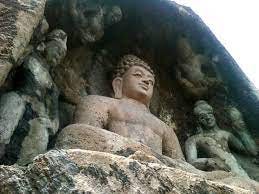
The chaityas here are irregularly oriented, hinting at multiple phases of construction, perhaps spanning centuries. And the presence of an Amaravati-style Buddha statue — with flowing robes and serene grace — ties this site to the broader artistic currents of early Andhra Buddhism.
The presence of a Shiva temple at Ramatheertham is deeply symbolic. According to local tradition, Shri Rama, during his exile, is said to have recited Shiva mantras daily here — a gesture of reverence that echoes the Rama-Rudra sambandha found in many Puranic texts. This aligns with the Rameshwaram tradition, where Rama installs a Shiva lingam before crossing to Lanka — a profound act of humility and unity between avatars.
The celebration of Mahashivaratri here is no less grand than Shri Rama Navami here. This dual veneration — of Rama as the ideal devotee and Shiva as the ascetic lord — makes Ramatheertham a rare site where Vaishnavite and Shaivite energies harmonize.
Located just 12–14 km from Vizianagaram and about 75 km from Visakhapatnam , Ramatheertham is well-connected by road. Regular buses and private vehicles make the journey smooth, and the drive itself — flanked by gentle hills and rural charm — sets the tone for the sacred experience.