

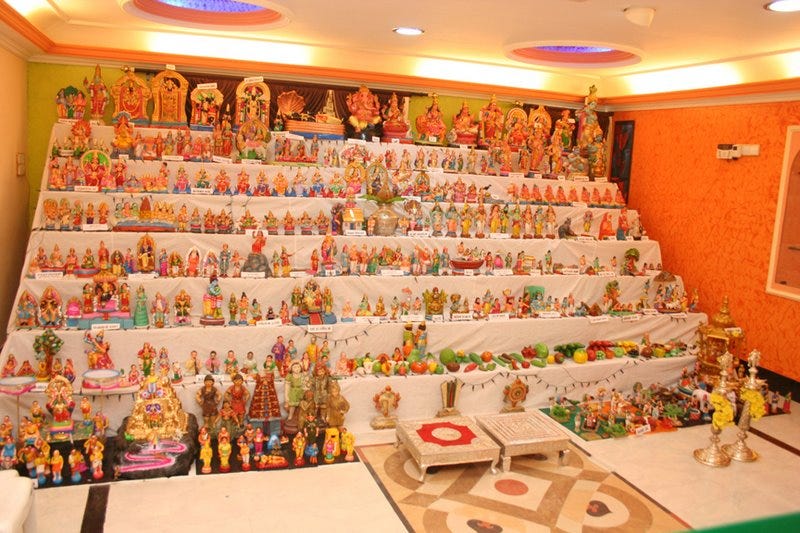
One of the main traditions during Navaratri is that of Golu, the display of dolls and figurines, which is observed in the Southern states of Tamil Nadu, Andhra Pradesh, Telangana and Karnataka. Golu typically means “decoration of dolls” in Tamil, while in Telugu it’s called Bommala Koluvu meaning “Court of toys” and Gombe Habba in Kannada meaning “Festival of dolls”.
Typically the Golu dolls are arranged in tiers, that narrate a story or a particular theme. Typically the Devi Bhagavatam story is narrated, or sometimes a them like that of a wedding. It is also a form of socializing, where neighbours, relatives and family friends often drop in to see the display, dine and sometimes have a musical recitation too.
History
It’s believed this tradition originated in the Vijayanagara Empire, during their grand Mahanavami celebrations. The Nayakas and Palegars spread this tradition from Karnataka to Andhra Pradesh and Tamil Nadu. The Mahanavami celebrations in Hampi were state sponsored, during which the Emperor would renew their alliances with the vassals, and exercise their power. It’s believed the Golu display was representative of the Durbar, and the hierarchy there.
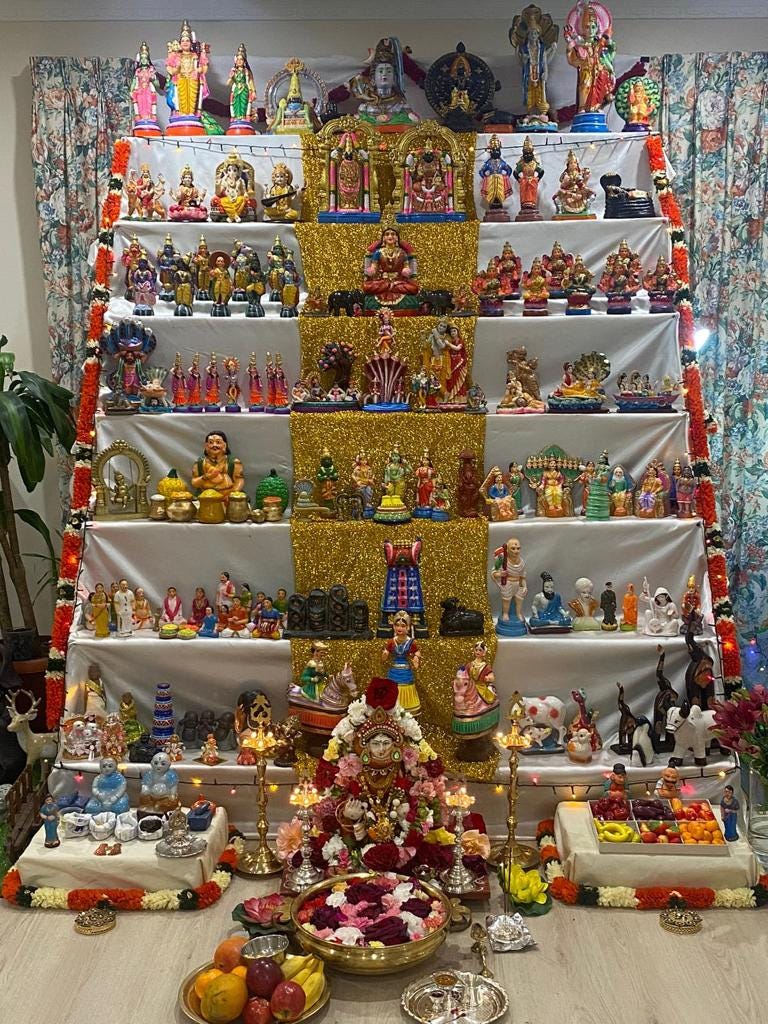
While it’s typically celebrated during Dasara, in Andhra Pradesh we have the Bommala Koluvu during Sankranti too, while the Khedawals, a Gujarati Brahmin community, who migrated and settled in Tamil Nadu, observe this during Krishnashtami too.
In Tamil Nadu, the Rajahs of Thanjavur and Pudukottai, followed this tradition at their courts, however it spread among the common people during end of the 19th century. It was primarily the upper class communities like Chettiars, Tamil Brahmins who began to hold it in their homes. Most major temples in Tamil Nadu also organize Golu during Navaratri.
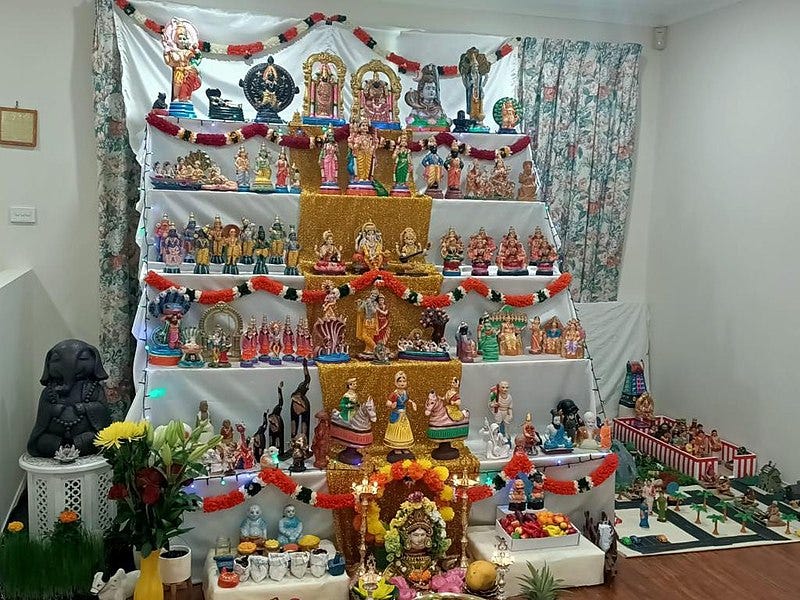
On first day of Navaratri, a welcoming ritual is performed for Lakshmi, Saraswati and Durga through a ritual called Kalasa Aavahanam, performed by an elder person. This is followed by setting up the wooden racks for display, usually an odd number( 3,5,7,9,11).
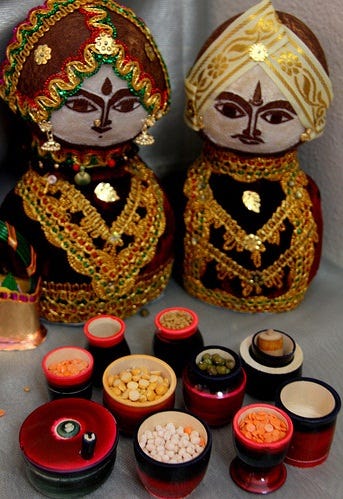
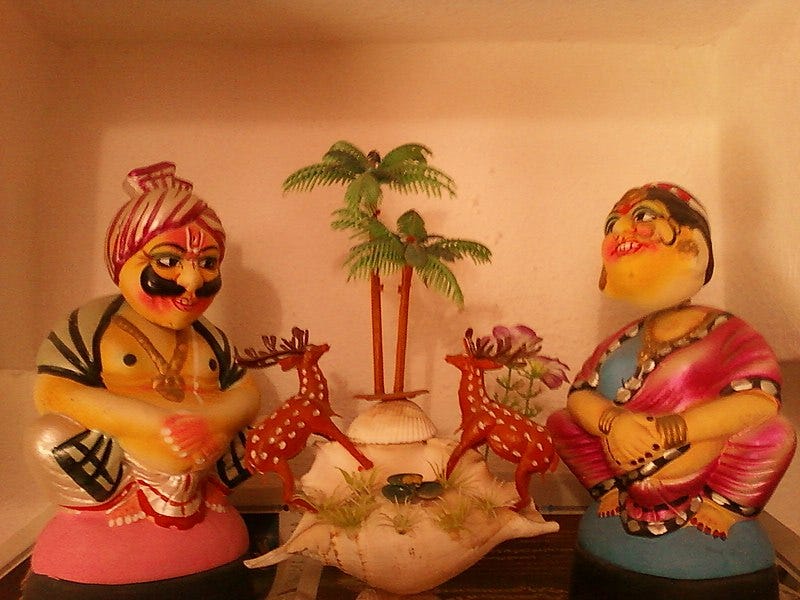
The dolls depicting characters from Puranas, royal courts, weddings, ratha yatra, every day scenes, minature utensils used in kitchen. Also wooden figurines of bride and groom are placed together called Marapachi Bommai or Pattada Gombe, usually made of sandalwood, teak, rosewood or dried coconut. The dolls depicting a husband and wife symbolize fertility, prosperity.
These figurines are often passed from one generation to another as a family heirloom. Evenings see neighbouring ladies visit the home, where gifts and sweets are exchanged. The Kuthuvillaku lamp is lit, in middle of a rangoli, and after puja food items are given to the guests. The first 3 days are dedicated to Durga, next 3 days to Lakshmi and last 3 days to Saraswati.
Saraswati Puja is done on the 9th day, where special prayers are offered, where books and musical instruments are worshipped. Finally on Vijayadashami, one of the dolls is symbolically put to sleep to mark the end during the evening, and Kalasha is moved a bit towards the North.
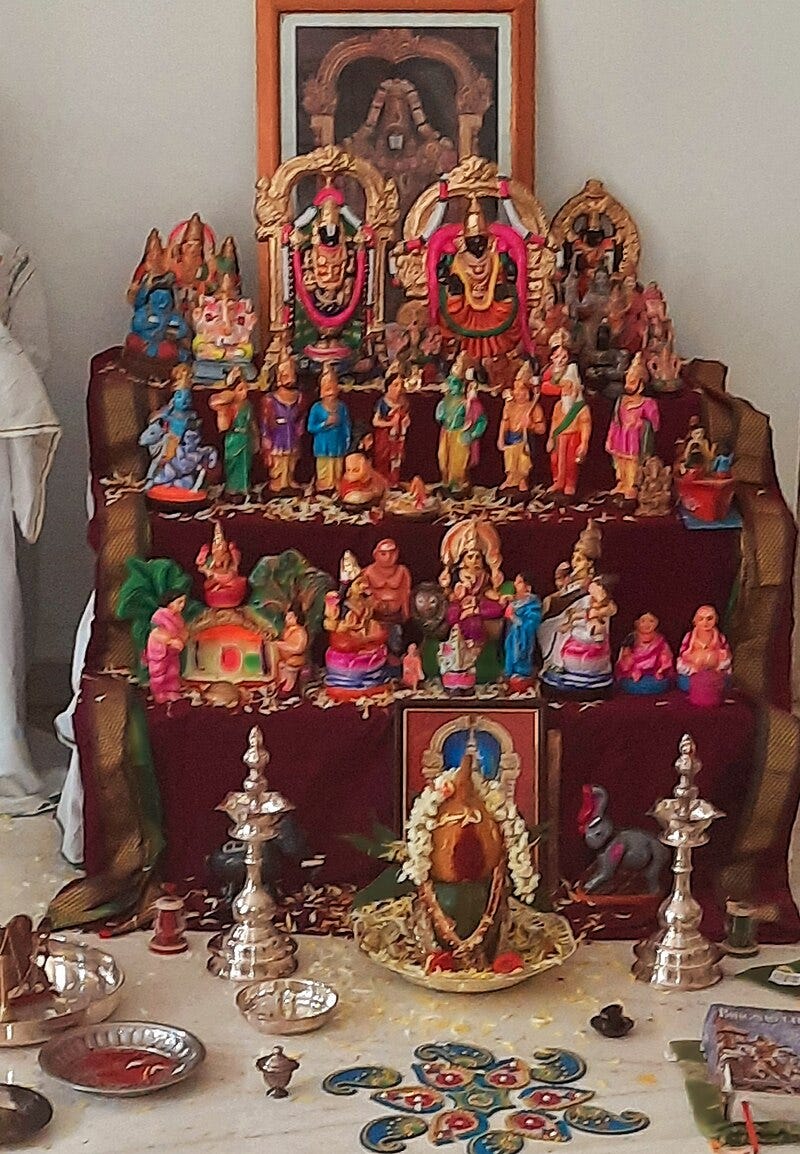
Golu in a way contributed to the development of native crafts, due to the royal patronage, that included pottery and clay work.
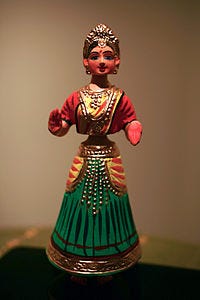
The famous Thanjavur dolls were created during the reign of Serfoji II, and are now a common feature in all golus. This tradition has also led to development of other traditional crafts like the Kondapalli wooden toys of Andhra Pradesh and the Channapatna toys of Karnataka.
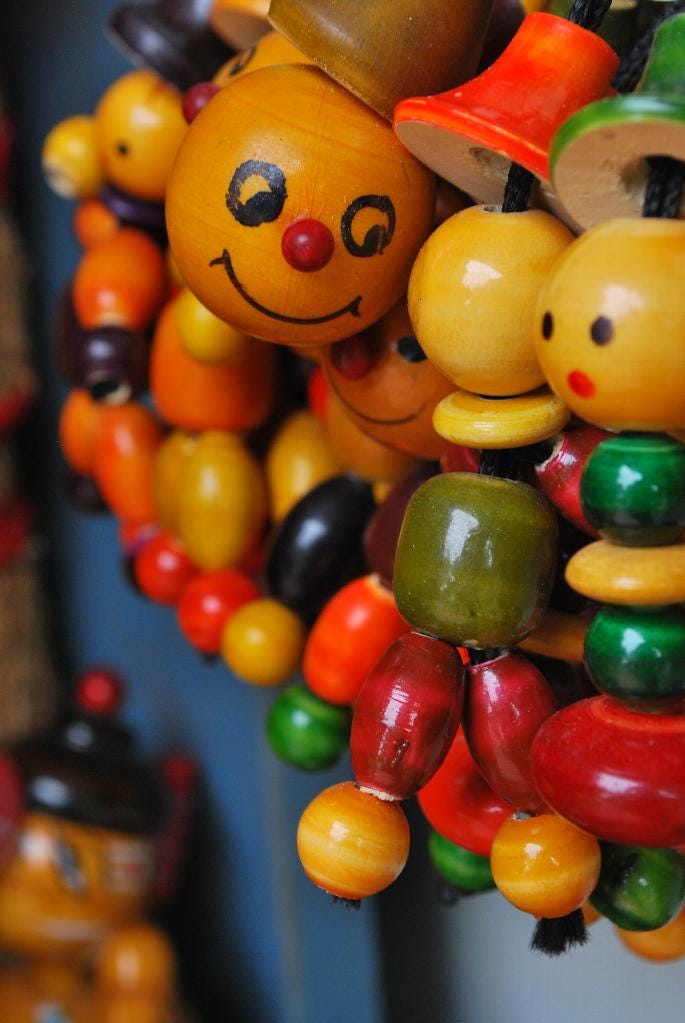
It has given a livelihood for many artisan communites, like the potters of Velachery who made those puravi, terracota horses for worship of Ayanar.
Golu is among one of the rich traditions during Navaratri, followed in the South, that has proved to be a source of sustenance for many artisan communities.